
The quick answer
New-patient calls often fail when the team sounds rushed, treats the call as data entry, gives a flat answer to an insurance or price question, or ends without directly offering an appointment. A stronger process is to answer promptly, use a warm greeting, ask a consistent set of discovery questions, and close with two specific appointment times.
The caller has already taken an important step. They found the practice, decided it might be able to help, and picked up the phone. The front desk should make the next step feel clear and easy.
Why the first call matters so much
Marketing creates attention. The phone call is where that attention becomes a real patient relationship.
If the call feels cold, confusing, or difficult, the practice can lose the opportunity even when its website, reviews, and advertising worked. Gary's framework treats the front desk as part of the practice's growth system, not simply an administrative checkpoint.
The goal is not to rush the caller into a booking. It is to understand the reason for the call, show that the practice is prepared to help, and give the caller a useful next action.
1. Answer promptly and sound pleased they called
Gary recommends answering within three rings and smiling before speaking. The smile matters because tone travels through the phone.
A simple opening is enough:
"Thank you for calling [Practice]. This is [Name]. How may I help you today?"
The words are less important than the experience. The caller should feel welcomed, not processed. Avoid making them repeat information unnecessarily, transferring them without explanation, or putting them on hold before understanding why they called.
2. Ask seven questions that help the practice respond well
Gary's call framework uses seven consistent questions:
- How did you hear about us?
- What prompted your call today?
- When was your last dental visit?
- Are you experiencing any pain right now?
- Do you have dental insurance?
- What time of day works best for you?
- Is there anything else we should know so we can prepare?
These questions do more than fill an intake form. They reveal urgency, scheduling needs, the source of the call, and what the team should prepare for before the patient arrives.
Ask them conversationally. The call should not feel like an interrogation. Listen to the answer before moving to the next question.
3. Do not let insurance become a dead end
When a caller asks whether the practice accepts an insurance plan, a flat yes or no can end the conversation before the caller understands the available options.
The team should answer accurately, explain what it can verify, and bring the conversation back to care. Gary's framework suggests language such as:
"We work with many plans and can verify your benefits before your visit. The most important thing is understanding the care you need. When can we see you?"
The exact wording must match the practice's real participation and billing policies. The principle is to avoid an abrupt answer that leaves the caller without a path forward.
4. Give context before discussing price
A caller may ask, "How much is a cleaning?" or "What will this treatment cost?" The question is reasonable, but the practice may not know the correct answer until it understands the patient's needs.
Instead of guessing or avoiding the question, explain why an examination is needed and promise a clear conversation before treatment begins:
"Every patient's needs are a little different. The doctor will assess what you need, and we will discuss the recommendations and costs before proceeding. Let me help you find an appointment."
This respects the caller's concern while avoiding a price quote without clinical context.
5. Close with two real appointment choices
Calls often fade at the finish because the team asks an open question such as, "When would you like to come in?" The caller then has to search an entire calendar in their head.
Gary recommends offering two specific choices:
"We have Tuesday at 10:00 or Thursday at 2:30. Which works better for you?"
Two options make the decision smaller. If neither works, the team can offer the next pair. The point is to guide the caller toward a practical choice rather than leave the next step vague.
6. Confirm the appointment before the call ends
Repeat the date, time, provider, location, and anything the patient should bring. Send the confirmation message immediately and make sure the patient knows how to contact the practice if something changes.
The first impression continues after the phone call. A clear confirmation shows the same care and organization the patient should expect when they arrive.
7. Coach the system, not just the person
A script sitting in a binder will not change performance. The team needs a short weekly review:
- How many new-patient calls came in?
- How many were answered and how many were missed?
- How many ended in a booked appointment?
- Where did callers hesitate or leave the process?
- What one part of the call should the team practise this week?
Gary's member kit uses a 70% or better call-to-appointment benchmark. Treat that as his coaching target, not a universal guarantee. The useful habit is to measure the practice against its own starting point and improve the conversation consistently.
"The front desk is not an administrative function. It's a revenue-generating function."
Gary Takacs
Frequently asked questions
What should a dental receptionist say to a new patient?
Use a warm greeting with the practice and team member's name, ask why the person is calling, listen carefully, gather the information needed to prepare, and offer two specific appointment times.
How should a dental office answer insurance questions?
Answer accurately based on the practice's real insurance participation. Explain what the team can verify, avoid making promises before checking benefits, and give the caller a clear path to an appointment.
How can a dental practice measure phone conversion?
Divide the number of new-patient calls that produced booked appointments by the total number of qualified new-patient calls reviewed. Define the calculation once and use the same definition every week.
The takeaway
A stronger new-patient call is not a longer sales pitch.
It is a warmer and more consistent path from "How can we help?" to a confirmed appointment. Answer promptly, ask the right questions, respond to insurance and price concerns honestly, and offer two real times.
Continue inside the membership
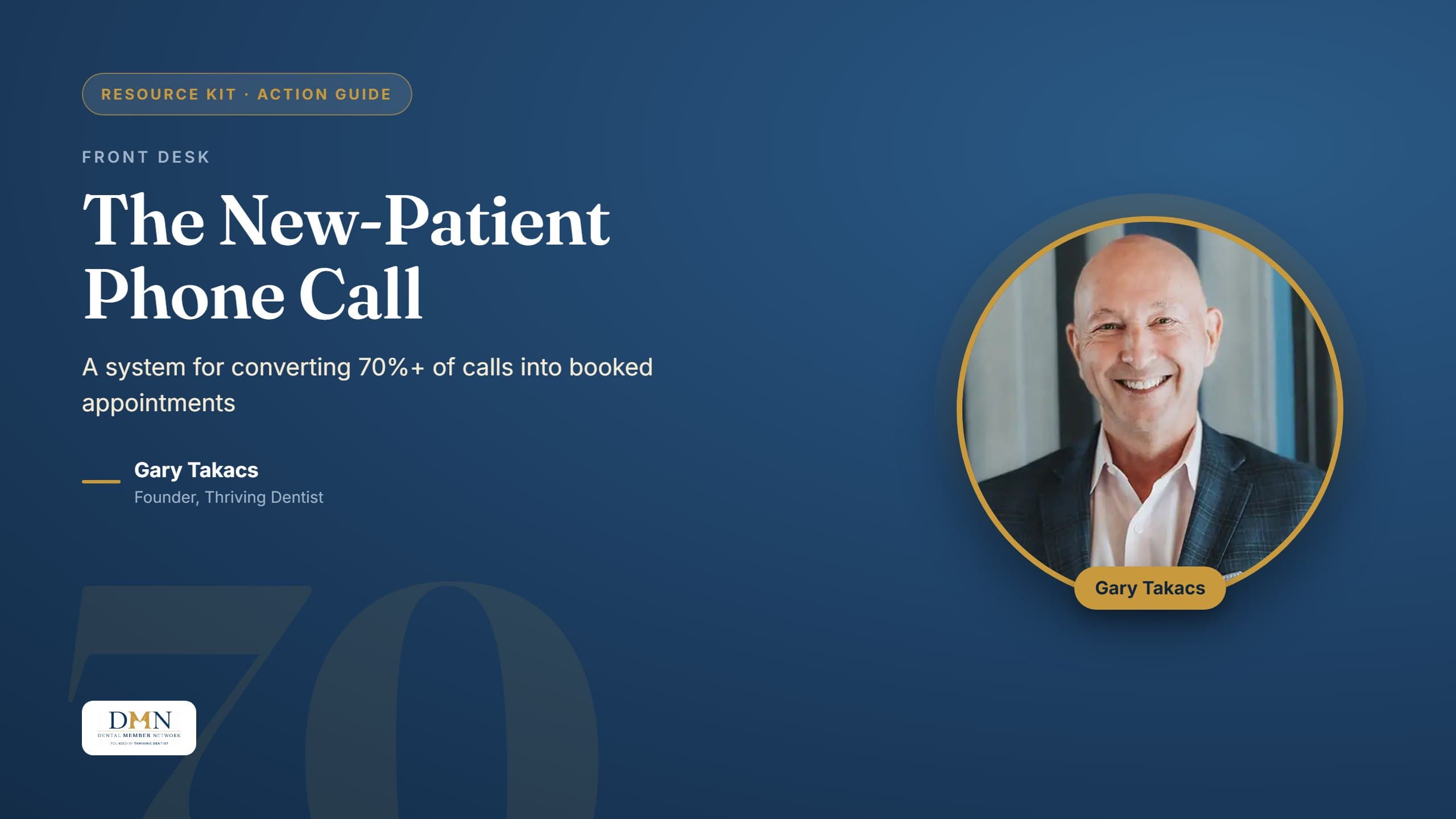
Get the complete The New Patient Phone Call: From Ring to Booking resource kit.
The member kit includes Gary's Action Guide, seven-question call flow, scripts, checklist, worksheet, wall poster, and team training resources.
Gary's invitation includes three months free. Use code GARY when registering through his expert link.
Start Your Three Months Free